Spray Foam Removal Advice for UK Homeowners

Spray foam insulation is now one of the most common causes of mortgage refusals and failed surveys in the UK, leaving many homeowners unsure of their next steps. This page provides clear, expert advice on spray foam removal so you can protect your property, restore lender confidence, and make fully informed decisions.

Frequently Asked Questions About Spray Foam Removal

Spray foam insulation can raise many questions, especially as more homeowners across the UK face mortgage refusals, roof concerns, or unexpected survey issues. To help you understand the risks, the removal process, and what steps you can take to protect your property, we’ve answered the most common questions below. These FAQs provide practical, expert guidance so you can make confident, informed decisions about restoring your home’s safety, ventilation, and mortgage eligibility.

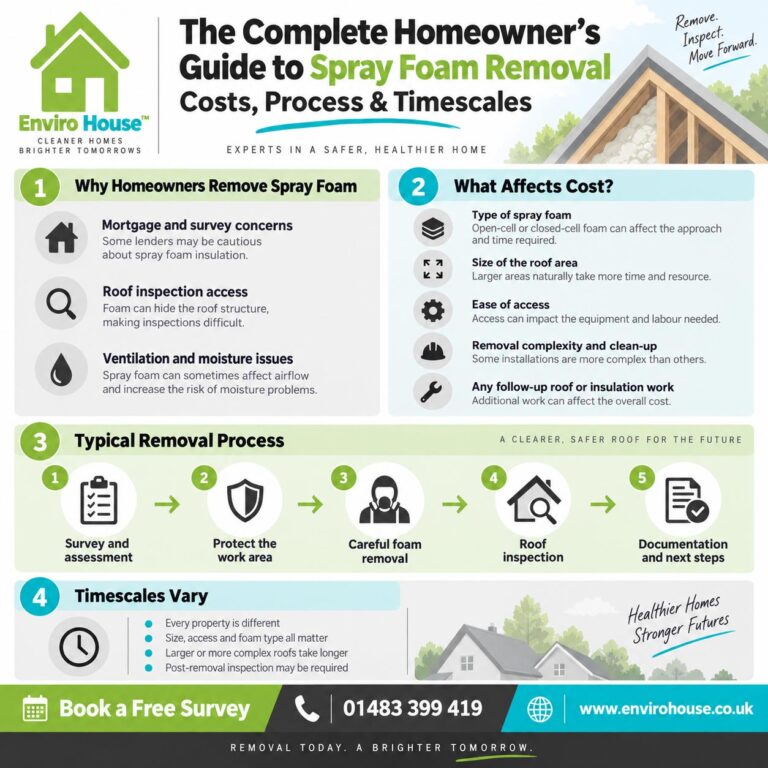
Spray foam removal is becoming increasingly common across the UK because mortgage lenders, surveyors, and property professionals have raised significant concerns about how spray foam affects roof structures. Spray foam bonds tightly to rafters, underfelt, and structural timbers, making it almost impossible for surveyors to assess the true condition of the roof. Without visible access to the rafters, they cannot determine whether the timber is damp, decayed, or structurally compromised. Because lenders rely heavily on surveyor reports to judge risk, any uncertainty automatically classifies the property as unsuitable for lending. This often leads to outright mortgage refusals, down-valuations, or stalled property sales.

Another key driver is moisture. Spray foam can restrict airflow, trapping condensation within the roof and accelerating timber decay. Many homeowners have discovered hidden mould or rot only after the foam was removed. Poor installation practices have also contributed to the problem, as some contractors applied foam without checking roof ventilation, existing moisture levels, or the health of the structure.

As a result, homeowners facing sale delays, remortgage refusals, or ventilation issues increasingly turn to professional spray foam removal. The service has become a crucial first step toward restoring lender acceptance, ensuring proper roof ventilation, and protecting the long-term health of the property.

Surveyors and mortgage lenders now view spray foam insulation as a high-risk product, primarily because it prevents a full and accurate inspection of the roof structure. When spray foam adheres to rafters and underfelt, it hides the condition of the timber beneath. Surveyors cannot check for moisture, decay, cracks, or structural defects, making it impossible to produce a reliable valuation or condition report. In these circumstances, surveyors typically classify the roof as “not visible” or “high risk,” which leads many lenders to decline the mortgage application.

Lenders are especially concerned about long-term structural safety. Spray foam can trap condensation within the roof, causing timber rot and weakening critical load-bearing components. Because the risk is hidden, lenders treat properties with spray foam as unstable collateral. Even if no damage is immediately obvious, lenders prioritise certainty and are unwilling to approve loans where surveyors cannot inspect the structure properly.

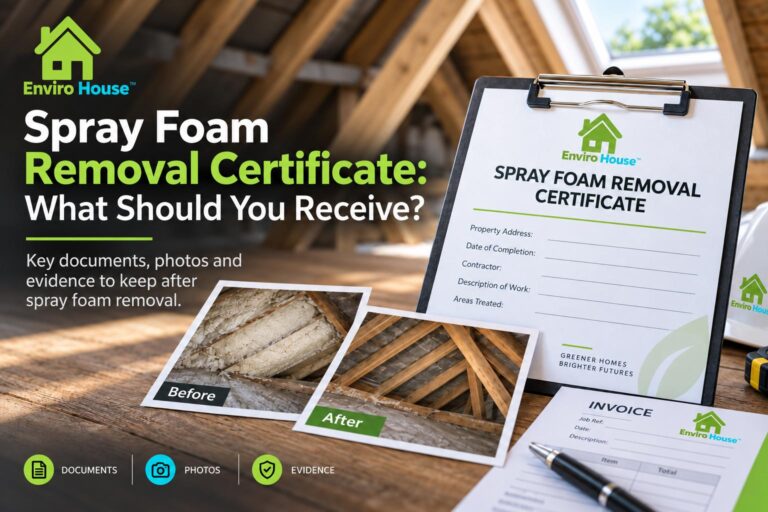
Additionally, inconsistent installation standards have made the situation worse. Many older spray foam installations were applied without adequate ventilation or moisture checks, increasing the likelihood of hidden problems. For these reasons, surveyors and lenders often require complete spray foam removal—and verifiable photographic evidence—before they will reconsider lending on the property.

The length of time required for spray foam removal depends on several factors, but most standard lofts can be completed within one to three days. The size of the roof space is the biggest determinant; small lofts with moderate foam coverage can often be completed quickly, while large or complex roof structures may require additional time. The type of spray foam also matters. Open-cell foam, which is softer and more flexible, is generally faster to remove. Closed-cell foam, however, is much more rigid and adheres firmly to timbers, making removal more labour-intensive and time-consuming.

Access plays a role as well. Lofts with tight entry points, steep pitches, or limited working space may take longer because technicians must work more carefully to avoid damaging surrounding materials. Preparatory steps—such as protecting floors, setting up lighting, and ensuring proper ventilation—also contribute to the overall duration.

Once removal is complete, the team will clean the area thoroughly and gather photographic evidence for the homeowner, surveyor, or mortgage lender. If hidden damage is uncovered beneath the foam, such as timber decay or damp, additional time may be needed to repair or stabilise the structure. Overall, while timescales vary, a professional team aims to complete the work as efficiently as possible without compromising safety, accuracy, or documentation quality.

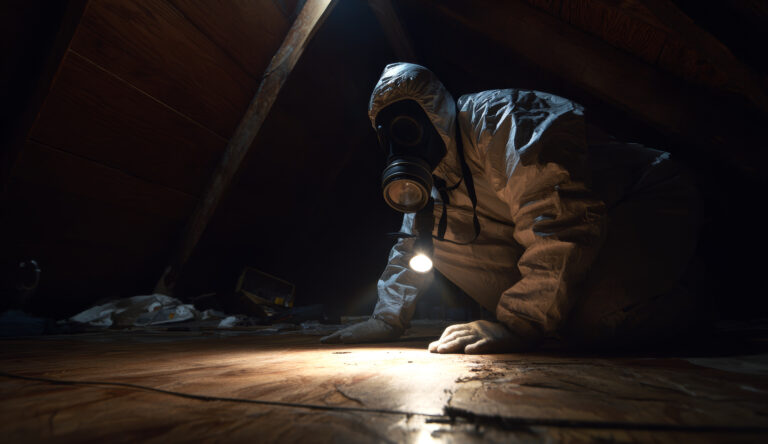
Spray foam removal begins with a detailed assessment of the loft or roof space. During this stage, a trained specialist identifies whether the insulation is open-cell or closed-cell, checks the thickness of the foam, assesses ventilation, and looks for visible signs of moisture or structural stress. This information determines the most effective removal method and helps generate an accurate quote.

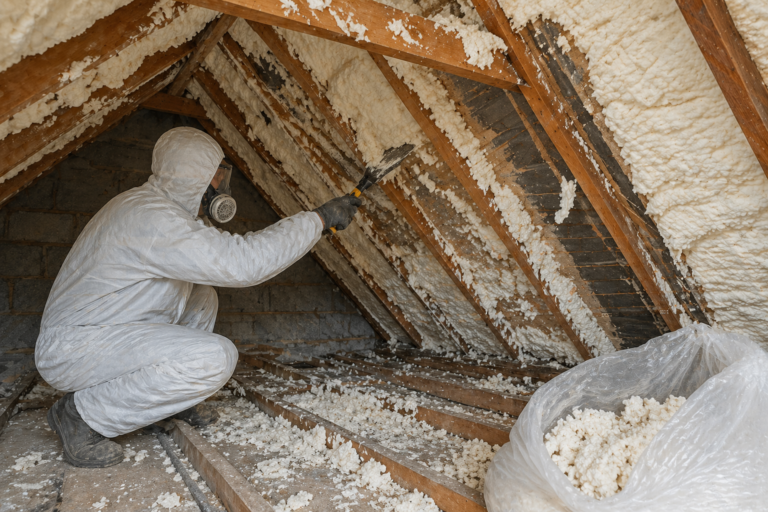
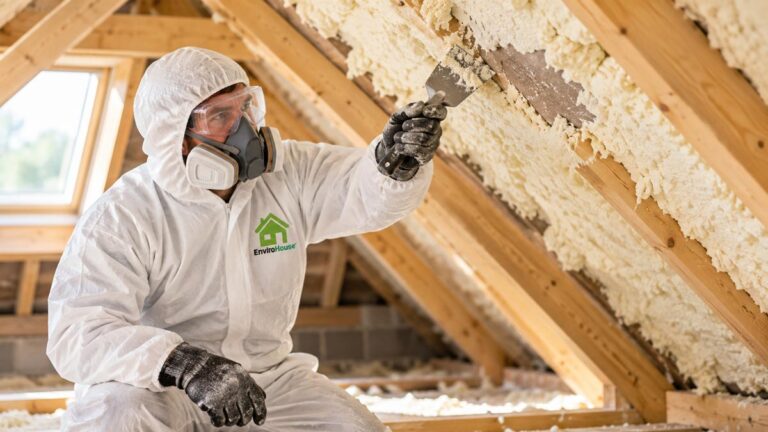
On the day of removal, protective coverings are placed throughout the access route to keep your home clean. Technicians then prepare the loft by setting up lighting, dust control systems, and safe work platforms. Removal is carried out methodically, section by section. Open-cell foam is carefully cut and lifted away, while closed-cell foam requires more controlled mechanical removal to avoid damaging rafters or underfelt.

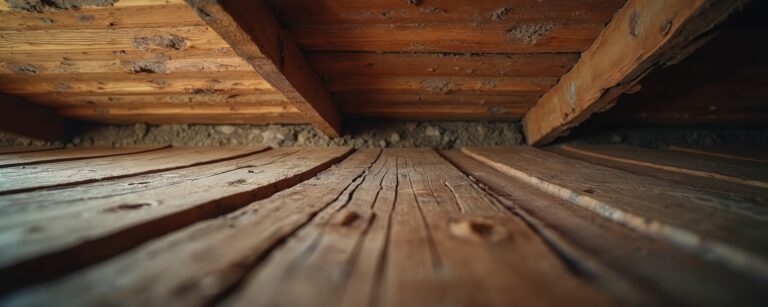
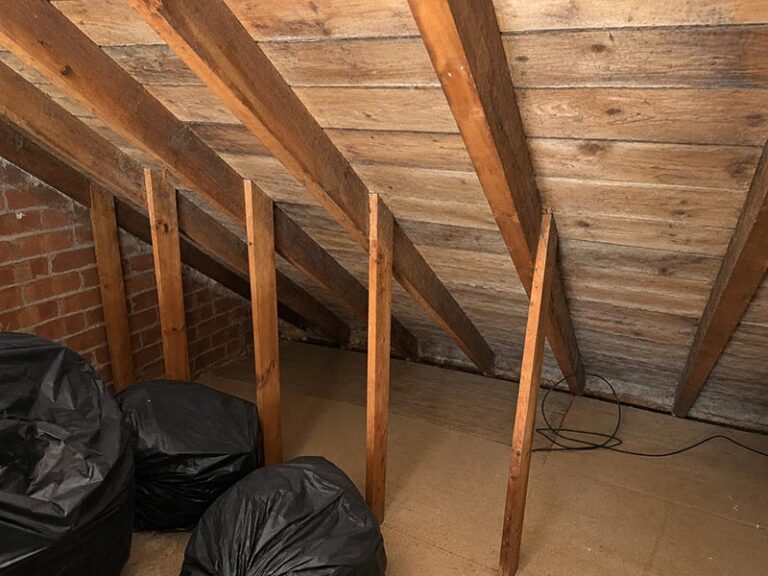
Throughout the process, specialists work slowly and precisely to expose the hidden roof structure. Once the foam is fully removed, the team cleans the loft thoroughly, removing dust, fragments, and residue. High-quality contractors then provide a full set of before-and-after photographs as evidence for surveyors and lenders. This documentation confirms that the spray foam has been removed completely, enabling mortgage applications, remortgaging, or property sales to move forward confidently.

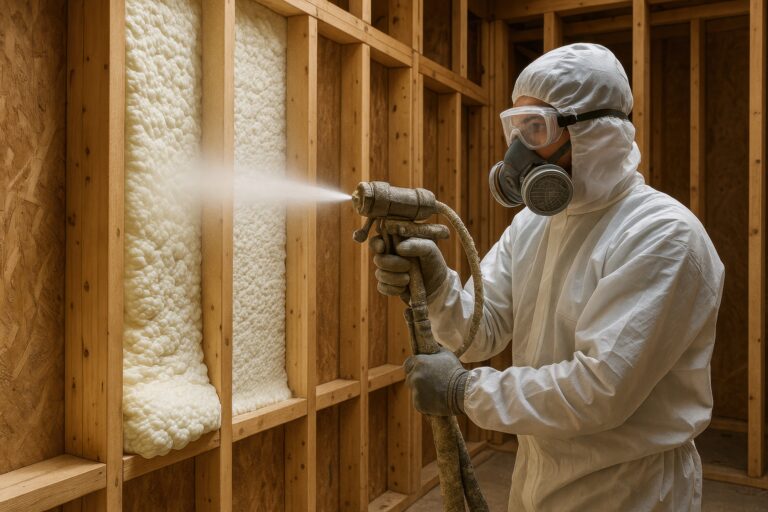
Leaving spray foam insulation in place can pose several significant risks, especially in UK homes designed to rely on natural roof ventilation. One of the biggest dangers is moisture entrapment. Spray foam can form an airtight seal that prevents moisture from escaping, causing condensation to build up within the roof cavity. Over time, this trapped moisture can lead to timber decay, mould growth, and structural instability—all of which may remain hidden until the foam is removed.

Another major risk is mortgage complications. Many lenders now refuse loans on homes with spray foam in the roof because surveyors cannot inspect the underlying structure. This means homeowners may struggle to sell, remortgage, or release equity. Even if the property appears sound, the presence of spray foam creates enough uncertainty for lenders to decline applications outright.

Poor installation quality adds to the potential problems. Some contractors applied spray foam too thickly, blocked ventilation points, or ignored pre-existing damp issues. These errors can worsen moisture build-up and accelerate timber deterioration.

Finally, repairs and maintenance become extremely difficult with spray foam in place. Roof leaks, damaged rafters, or insulation faults cannot be diagnosed properly when the foam obscures the structure. Removing the foam sooner rather than later helps mitigate these risks and protects the long-term integrity and value of the property.

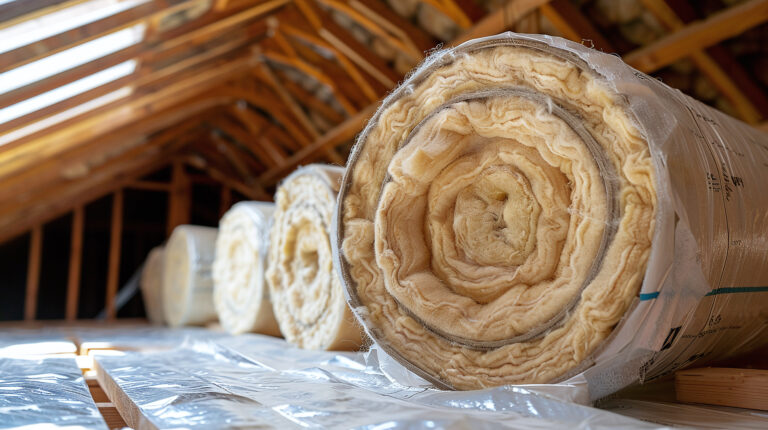
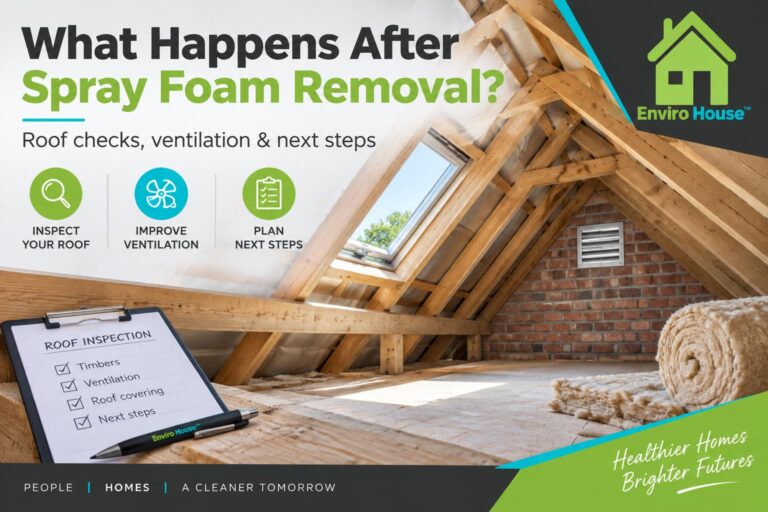
Yes, in most cases traditional insulation is the preferred option for UK homes after spray foam removal. Materials such as mineral wool, fibreglass rolls, and multi-foil insulation provide strong thermal performance while maintaining the breathability essential for a healthy roof structure. Unlike spray foam, traditional insulation does not bond to rafters or underfelt, allowing surveyors full visibility of the roof’s condition. This makes future inspections, repairs, and maintenance far easier to manage.

Traditional insulation also works harmoniously with natural ventilation systems. When installed correctly, it allows airflow to continue through the loft, preventing condensation build-up and reducing the risk of mould or damp. This is particularly important in older properties or homes with timber roofs, where moisture management is crucial.

Another key advantage is flexibility. Traditional insulation can be topped up as needed, replaced easily, or upgraded to meet new energy efficiency standards without creating structural complications. Lenders and surveyors view these materials as low-risk, meaning they pose no issues for mortgages or valuations.

After spray foam removal, a professional installer can advise on the best insulation materials based on budget, property type, and energy-efficiency goals. Overall, traditional insulation offers long-lasting performance, full lender acceptance, and the peace of mind that your roof can breathe and function correctly.

Looking for Professional Spray Foam Removal Services?

We provide safe, efficient spray foam insulation removal for homes needing restoration or renovation. Whether you’re replacing problematic material or ensuring your property meets mortgage lender requirements, our expert team delivers reliable, high-quality results you can trust.

Get A Free Quote

Make sure the correct details are entered to ensure we get the quote to the right place.

By submitting this form, you accept and agree with our privacy policy.

Expert Spray Foam Removal Advice for UK Homeowners

Getting reliable spray foam removal advice is essential if you’ve been told your insulation may affect surveys, mortgages, or your roof structure. Many homeowners feel overwhelmed when lenders raise concerns, but understanding the facts can make the process far easier. Our guidance helps you navigate every stage—from identifying the type of spray foam in your loft to knowing when professional removal is required. With clear, practical information, you can make confident decisions that protect your home and its long-term value.

Spray Foam Removal Advice to Restore Mortgage Approval

One of the biggest reasons homeowners seek spray foam removal advice is mortgage rejection. Lenders across the UK increasingly decline applications on properties with spray foam insulation because of ventilation concerns, moisture risks, and structural uncertainty. Our expert guidance explains why this happens, what lenders look for, and how proper removal restores confidence. With the right approach and documentation, many homeowners successfully regain mortgage approval and avoid delays in selling or remortgaging.

Independent Spray Foam Removal Advice You Can Trust

Not all spray foam is installed the same way, and the condition of your roof can vary greatly. That’s why impartial, accurate spray foam removal advice is invaluable. We help you understand the signs of poor installation, the risks of leaving foam in place, and the safest methods for getting it removed. Whether you’re dealing with open-cell or closed-cell foam, our guidance ensures you know what to expect and how to proceed safely. Trusted advice leads to safer homes and better outcomes.

Spray Foam Removal Advice for Long-Term Property Protection

Seeking spray foam removal advice isn’t just about mortgages—it’s also about protecting the health of your roof and improving ventilation. Spray foam can trap moisture, hide timber decay, and make repairs difficult, which is why professional assessment and removal are often recommended. Our information helps you plan next steps, including breathable insulation alternatives that keep your property compliant with modern standards. With the right advice, you can restore proper airflow, prevent long-term damage, and maintain a healthy, efficient home.

Where We Offer Professional Spray Foam Removal

Spray Foam Removal Across the UK
Lancashire
London
Cornwall
Midlands
Wales
Bristol
Yorkshire
East Anglia
South Scotland
North Scotland

Enviro House provides professional spray foam removal services to homes and properties across the entire UK, supporting customers in all regions nationwide, including:

If you’re dealing with outdated or problematic spray foam insulation, get in touch with Enviro House. Our experienced team offers expert advice and tailored removal solutions to help restore your loft or property safely and effectively.